WHAT IS THE BIBLE?
The Bible is a collection of 66 distinct books (39 Old Testament, 27 New Testament) written by roughly 40 different authors over a period of approximately 1,500 to 1,600 years. It is considered God’s Word through divine inspiration, where authors were guided by God’s Spirit to write a cohesive message of redemption. It tells one unified story telling one unified story of God creating, pursuing, and redeeming people through Jesus.
WHAT DO WE BELIEVE ABOUT THE BIBLE?
We believe in the authority of God's Word, both the Old and New Testaments. They are inspired, infallible and superior to all human authority. God's Word didn't originate with any human person, but persons spoke and wrote as they were inspired by the Holy Spirit (2 Peter 1:20-21).
“All Scripture is inspired by God and is useful to teach us what is true”
WHY SHOULD I TRUST THE BIBLE?
The Bible was written by about 40 authors, on three continents, over 1,500 years, in three languages — and yet it tells one cohesive story pointing to Jesus.
We have around 25,000 handwritten manuscripts of the New Testament alone, far more than any other ancient text. Of the roughly 400,000 variants across those manuscripts, 99% are minor differences like spelling or translation nuances. What you're reading today is remarkably close to what was originally written thousands of years ago.
Beyond the evidence, people throughout history have given their lives rather than deny what this book says — including 10 of Jesus' 12 disciples. The Bible has faced centuries of resistance, persecution, and critique, and it hasn't just survived — it's thrived.
WHY SHOULD I READ THE BIBLE?
The Bible isn't just a collection of stories — it's a living message from God designed to teach us what is true, show us what is wrong in our lives, and equip us to live the way we were created to live.
Research from the Center for Bible Engagement found that reading the Bible at least four days a week is linked to a 228–416% increase in proactive faith practices, a 14–60% decrease in struggles like anxiety, loneliness, bitterness, and destructive habits, and a 20-62% reduction in behaviors like extramarrital sex, lying, and mishandling money.
WHERE DO I START?
Start by picking up a Bible — physical is best. If you don't have one, grab a free one from our worship center or download the YouVersion Bible App (bible.com), which gives you access to thousands of translations and reading plans right on your phone.
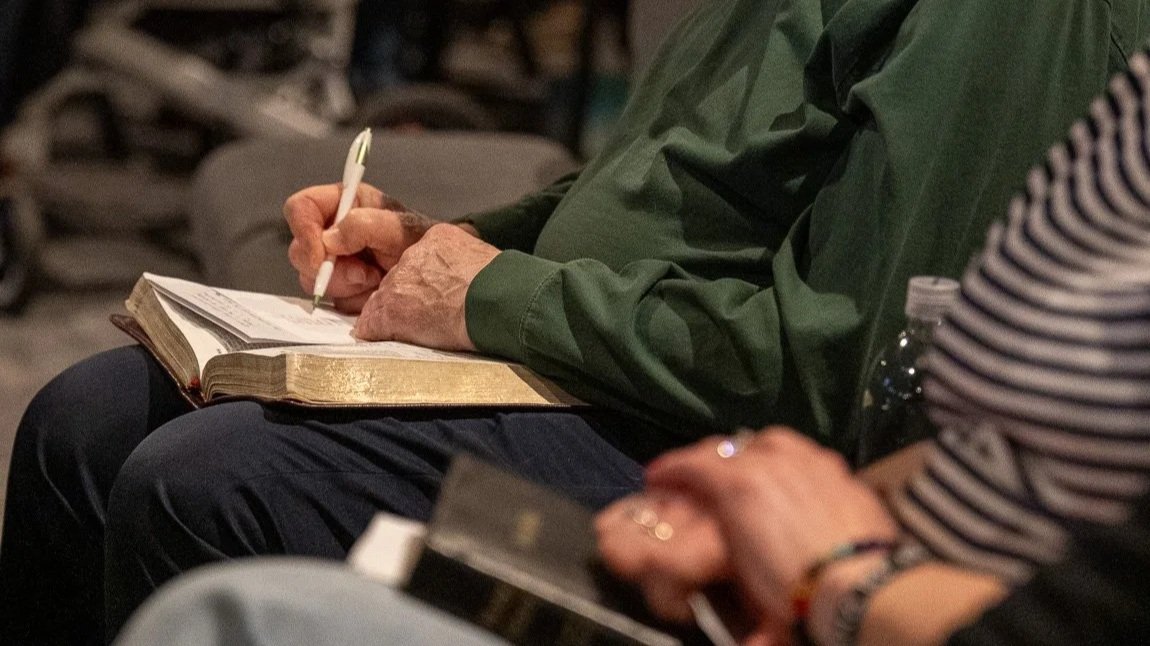
Once you have a Bible in hand, try the SOAP Method — a simple framework that turns passive reading into real engagement with God's word:
S — Scripture. Read through a book of the Bible until a verse or phrase stands out to you. Write it down.
O — Observation. What's happening in the text? Why might this be jumping out at you? What do you think God could be saying?
A — Application. What are you being invited to do in response? This is where reading becomes living.
P — Prayer. Talk to God about it. Ask for clarity, strength, and the courage to follow through.
Not sure which book to start with? Here are some suggestions based on where you're at right now:
If you're anxious — start in the Psalms (especially Psalm 23, 46, and 91). If you're grieving — read Lamentations. If you're feeling stuck — Ephesians. If you're in a spiritual battle — 1 Corinthians. If you're angry or confused — Job. If you're new to faith — the Gospel of Mark or John. If you're hungry for depth — Romans. If you're worried about the future — Revelation.
HAVE ADDITIONAL QUESTIONS?
Our church would love to walk with you as you engage with the Bible. You can email our Discipleship Pastor LJ at lmccauley@frontlinegr.com.